Mapping Rivers on Ynys Môn

A Community Mapping Journey
Working as a community mapper on Ynys Môn over the past few months, I’ve had the pleasure of collaborating with young people on the island to explore and map their local rivers. But this wasn’t just about tracing waterways on a map — it was about encouraging communities, especially young people, to see rivers as living entities, deserving of respect, care, and protection.
Inspired by the Rights of Rivers Movement
This approach draws inspiration from the global Rights of Rivers movement, where rivers in several countries are being recognised as legal persons with rights. The idea is simple but powerful: if we begin to think of rivers not as objects but as living beings, we might treat them with more responsibility and compassion.
Walking the Afon Crigyll


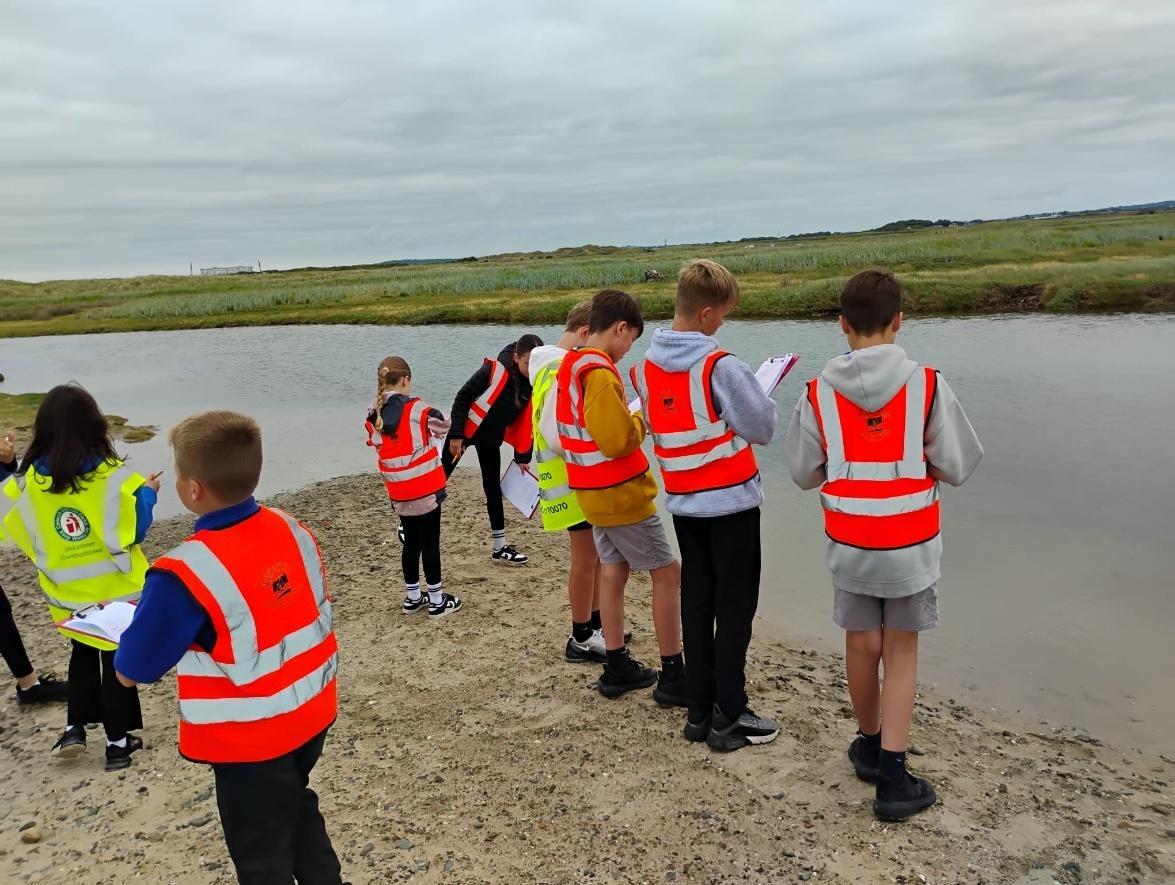
My most recent project with Ysgol Gynradd Rhosneigr involved two sessions with Years 5 and 6. In the first session, we took a guided walk along their local river, the Afon Crigyll. The children were encouraged to imagine themselves as the river, flowing through their local landscape. We stopped at key points along the route to observe and reflect, asking questions like:
- What can I hear?
- How do I feel here?
- If I were the river, what would I see?
This immersive experience encouraged the children to slow down and truly connect with the river. Surprisingly, some of the pupils had never walked the river path before, despite its closeness to their school — a reminder of how our modern lifestyles can disconnect us from our immediate environment.
Emotions at the Estuary

At the estuary, the end of our journey where the Afon Crigyll meets the sea, the children jotted down words that captured the emotions they had felt throughout the journey. Words like peaceful, calm, and relaxed came up repeatedly — proof of the quiet magic a river can offer when we take the time to notice it.
Mapping Through Art and Reflection


Some of the Afon Crigyll artwork created by Ysgol Rhosneigr pupils (above).
The second session was a creative morning in the classroom. The children created a map of the Afon Crigyll, each adding their unique reflections, sights, and feelings from the walk. No two maps were the same. Each one reflected a personal journey — a testament to how differently each of us experiences nature.
Rivers as Characters
We ended the session by asking a big question: “If the river were a person, what would it look like?”


If the river was a person, what would it look like? By Ysgol Gynradd Rhosneigr (above).
The artwork was as varied as it was imaginative, and the children created beautiful pieces of art that visualised the river as a character. The hope is that this exercise helps embed a lasting sense of connection and responsibility — so that as they grow, they continue to see rivers not just as features of the landscape, but as living neighbours.
A Living Wetland at Llyn Maelog
This wasn’t my first time working with Ysgol Rhosneigr. During a recent internship with the North Wales Rivers Trust, I worked with the school on the Living Wetland Project at Llyn Maelog. The aim was to improve the lake’s water quality by installing a floating wetland platform to absorb excess nutrients, helping to prevent harmful algal blooms caused by cyanobacteria.
The children helped plant wetland species onto the platform before it was floated into position on the lake. Today, the wetland is flourishing — a living reminder of their effort and the positive impact young people can have on their environment.
Creative Conversations by the Afon Lleiniog
In another workshop which took place during this year's Aberlleiniog Sculpture Trail art event in Llangoed, beside the Afon Lleiniog, we invited participants to imagine the river as a person. Through art and discussion, they explored powerful questions like:
- If the river could speak, what would it say?
- How would it feel? And why?


“Ask the river” creative workshop next to the Afon Lleiniog in Llangoed (above).
Stories, Concerns, and Hopes
This creative dialogue helped deepen the community’s emotional connection to their river. The exercise wasn’t just about imagination — it was about empathy and fostering a protective attitude toward our vulnerable waterways. Some very interesting conversations took place with the local people who spent time sharing their memories and connections to the river. They also spoke about their stories, concerns and hopes for the future of their local river.
The Growing Rights of Rivers Movement
The idea of granting rivers legal rights might seem radical, but it’s already happening around the world. It began with a landmark victory in New Zealand in 2017, when the Whanganui River was granted legal personhood after a 160-year campaign led by the Māori people. Since then, rivers such as the Ganges and Yamuna in India, the Atrato River in Colombia, and the Magpie River in Canada have been given similar recognition.
A UK First: The River Ouse
More recently, the River Ouse in England became the first UK river to be granted rights — including the right to flow freely, be pollution-free, and support native biodiversity.
These legal recognitions reflect a powerful shift in thinking. Rivers are no longer seen solely as resources to exploit, but as entities with intrinsic value — part of our shared community.
Mapping with Purpose on Ynys Môn
It feels truly rewarding to be doing this work for the Public Map Platform, a project that supports communities across Ynys Môn in reconnecting with their landscapes — especially young people. Through the creation of a map the aim will be to make layers of complex information simple and accessible to as wide a community as possible. We're gathering data for environmental layers, focusing on issues like air quality, biodiversity, and water quality. Mapping in this way isn’t just about geography; it’s about storytelling, awareness, and advocacy.
The River Project North Wales

Image captured of the Afon Ogwen in North Wales (above).
The River Project North Wales is a deeply personal initiative where I’m using my platform as a fine artist to shine a light on the vital importance of river health and the protection of the ecosystems that depend on it. Through this project, I aim to raise awareness of the fragile balance within our waterways and encourage a deeper connection to the natural world. Working within the landscapes and communities of Ynys Môn, the project aligns seamlessly with my wider fine art practice, allowing me to engage with local environments and voices in a meaningful and creative way.
Teaching more than just Geography
When young people map their rivers and see them as living beings, they are learning more than just geography — they’re learning responsibility, empathy, and care. They are given a voice in shaping how we value and protect the places we call home.
The Rights of Rivers movement is still in its early days here in the UK, but it’s growing. As more communities become aware of the legal, ecological, and emotional importance of our waterways, there’s hope that many more rivers across the country — and the world — will be granted the protection they deserve.
Planting Seeds of Change
By asking communities on Ynys Môn to envision their rivers as living entities, seeds of thought are being planted that may help shift perceptions about the role of rivers in our lives. Ultimately, this project aimed to deepen the connection between people and place — making the health of the river not just an environmental issue, but a deeply personal and communal one.