01
Social
Community-mapped data on what gives a place its social value: where people connect with each other and nature, where they exercise, what inspires them, what they can afford, what they look after, and what they want to change.
It's a familiar tale: communities across the UK facing economic and social decline. Empty shops, shattered windows, a fading sense of pride, and neighbours who feel more like strangers.



Much of it sits behind paywalls or is shaped by private interests. It fails to capture the real social value of diverse communities — and decisions of every scale pivot on it anyway.
Formal consultation reaches only a small fraction of the public, and routinely underrepresents younger people. Well-meaning initiatives miss the mark when the people they affect aren't in the room.

Scarce resources get spent on the wrong things. Trust between communities and local authorities diminishes. The gap between what the system promises and what it delivers widens.
Our approach
We start from a principle: access to trustworthy data should be a human right.
Good decisions about place need good data. They also need the people who know that place in the rooms where decisions get made. Public Map is built to make both easier, whether you're making decisions or living with them.
We think of the platform as a data sandwich: existing published data (census, environmental monitoring, administrative records) layered with multimedia maps that communities make themselves about the things that matter to them.
Our method is a data sandwich — built from four kinds of layers.
Community-mapped data on what gives a place its social value: where people connect with each other and nature, where they exercise, what inspires them, what they can afford, what they look after, and what they want to change.
Our team of bards works with children and young people to make multimedia cultural maps of their places, through stories, music and song. It's heritage told by those who'll inherit it.
A network of community scientists gathers ground-truth data on air quality, biodiversity and water. We combine it with existing environmental datasets, and run citizen science projects in schools to grow the next wave of mappers.
We gather existing datasets (census, economic, administrative) and find ways to put them on the map, even when they weren't designed for it. And we work with local authorities to shape how new data gets collected, so it can do the same job.
Together these layers build a richer, more honest picture of what a place is and what it needs.
Watch, in two minutes
A short film from the team, shot across the communities we work with on Ynys Môn. It's the quickest way to see how mapping unfolds on the ground — and why it matters.
The method needs mapmakers.
We're training a new generation of community scientists with the digital skills and data literacy to build granular maps of what official data misses.
The gap gets filled
Same place, two views. First: what census and administrative records capture.
Then: what a trained community-science network adds —
air quality,
stories,
wildlife,
the paths people actually walk.
Five values guide this project.
They shape how we build the platform, how we show up in communities, and how we measure whether the work is worth doing.
We make things with communities, not for them. Knowledge, data and design emerge from the people whose lives and places are being mapped.
We think in long horizons. The decisions we help inform today should serve the children and grandchildren who inherit the places we shape.
Communities carry histories. We listen with care, design with consent, and never ask people to relive harm in order to be counted.
Participation should not be reserved for the confident, the connected, or the already-heard. Our tools, language and processes are built to widen the door.
We acknowledge the connectedness of all things: people to place, present to future, local to global. Every map we make reflects a web, not a grid.
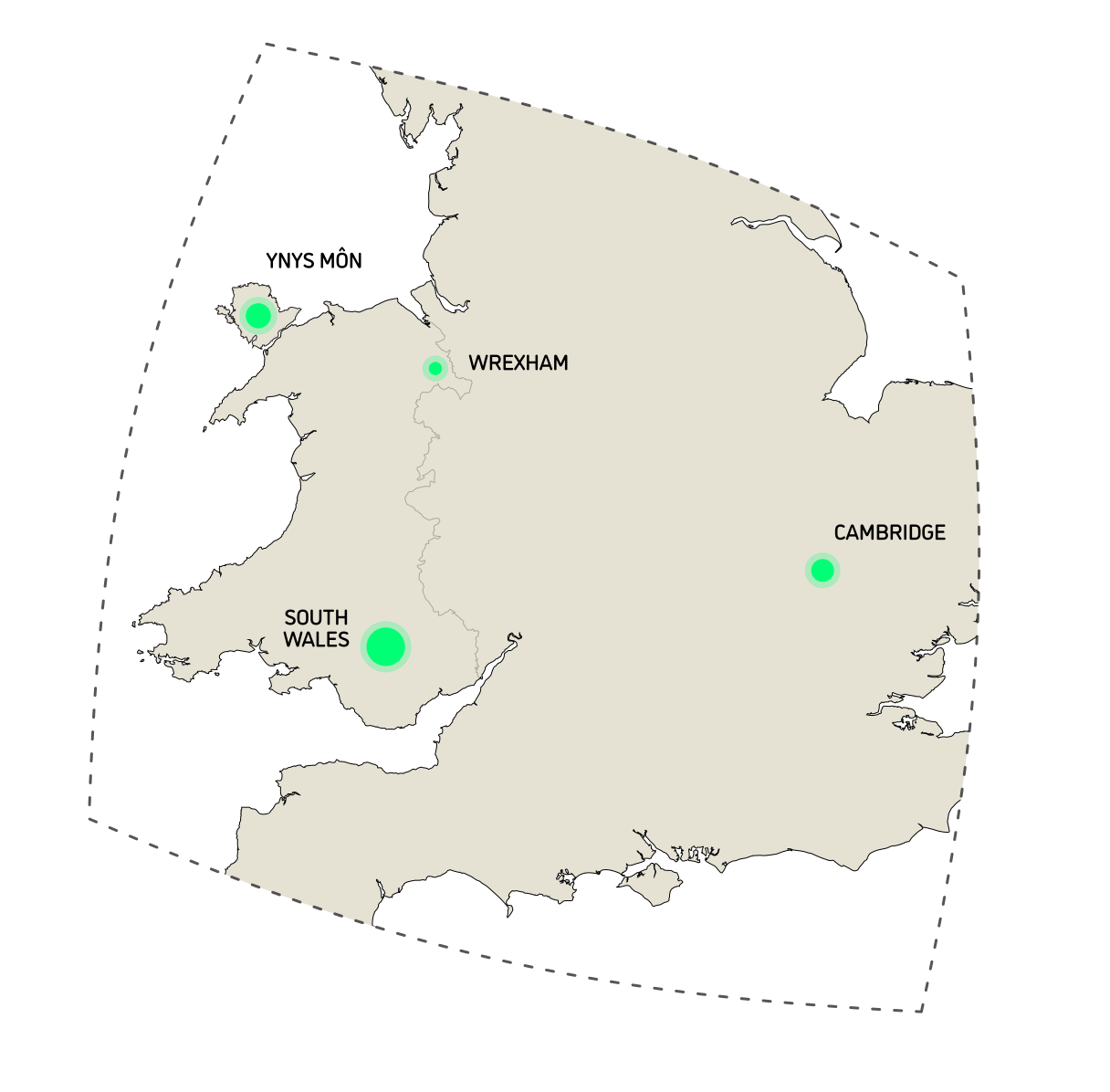
Public Map began on Ynys Môn, with communities in North Wales. It's growing — mapping operations are underway in East Anglia, and new partners are coming on board. The problem isn't tied to Wales; it shows up anywhere data doesn't reflect a place or voices aren't being heard. The more places we work in, the richer the map gets for everyone using it.
From local lives to global goals
Public Map is built to help deliver the UN Sustainable Development Goals and Wales' Well-being of Future Generations Act. Delivering them depends on place-based action, good local data, and meaningful public participation. We close the gap between global frameworks and what's actually happening on the ground — by helping communities co-produce hyper-local evidence at the scales decisions are made.
We will only use your details to keep you updated on the project.